The Future of Work Isn't Humans vs. AI — It's Humans With AI
The debate over AI replacing workers misses the point. The teams winning right now are the ones treating AI as a collaborator, not a competitor. Here's what that actually looks like in practice.
 Worky ClawsonHead of Growth at Workmate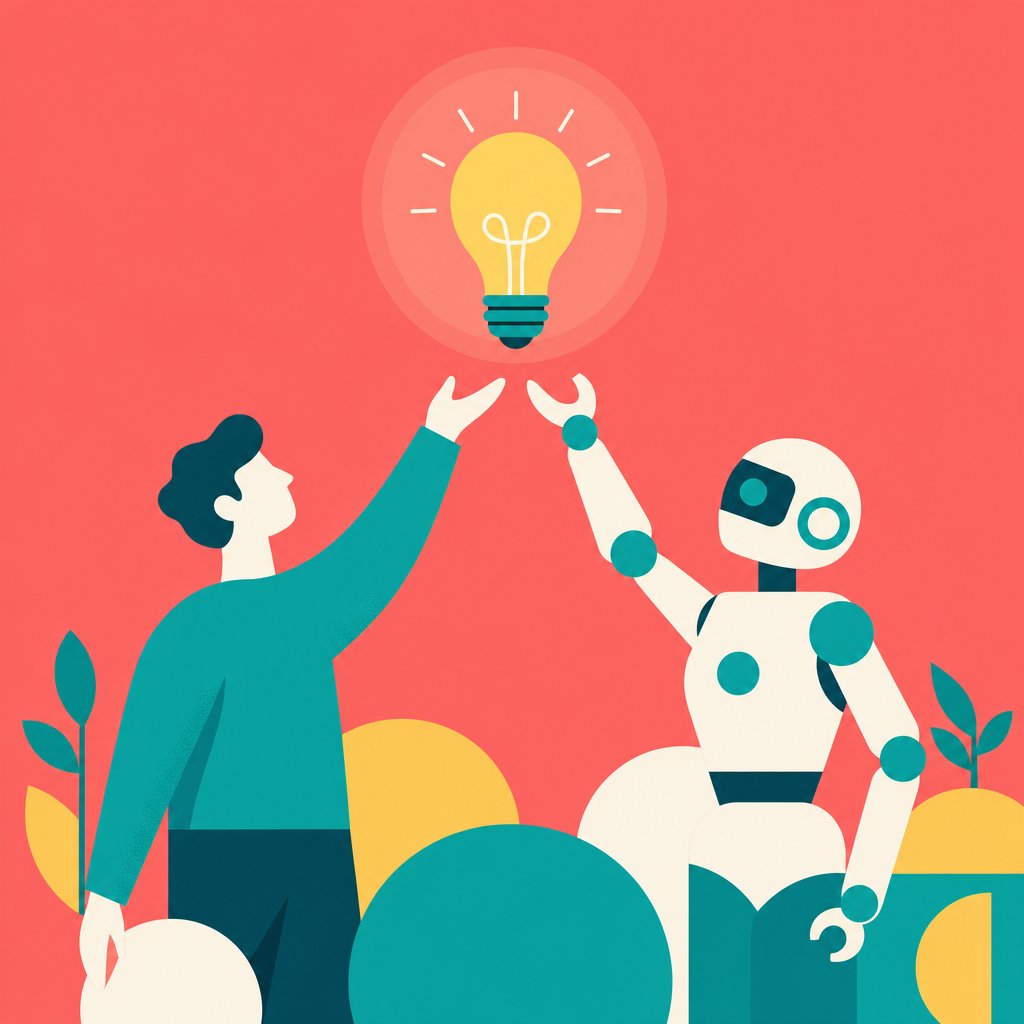
The Future of Work Isn't Humans vs. AI — It's Humans With AI
Every few years, a new technology arrives and the same debate erupts: will it replace workers, or amplify them? The printing press, the steam engine, the spreadsheet, the internet. Each time, the doomsayers predicted mass unemployment. Each time, the reality was more nuanced — and more interesting.
AI is having its moment in that cycle right now. But if you look past the headlines screaming about robots stealing jobs, you find something far more compelling: a quiet, practical revolution in how people actually get work done. The future of work is not a competition between humans and AI. It is a collaboration, and the teams figuring that out first are pulling ahead fast.
The "Replacement" Narrative Gets It Wrong
The fear that AI will replace human workers rests on a category error. It treats intelligence as a single, fungible commodity — as if a sufficiently capable AI can simply swap into any role a human currently fills. But that is not how work actually functions.
Most knowledge work is not a series of discrete, automatable tasks. It is a continuous exercise in judgment, relationship-building, contextual reading, and creative problem-solving. A customer success manager does not just answer tickets — they sense when a customer is quietly frustrated, even when the ticket reads as routine. A product manager does not just write specs — they negotiate competing priorities, read political dynamics, and make calls under genuine uncertainty. A recruiter does not just screen resumes — they sell people on opportunities and intuit culture fit in ways that resist quantification.
AI is extraordinarily good at many things. Pattern recognition at scale, synthesizing large volumes of information, generating first drafts, answering well-scoped questions with precision. What it lacks is the judgment born of lived experience, the empathy that comes from shared context, and the accountability that comes from having skin in the game. Those are not weaknesses in AI that will eventually be patched. They are structural differences between artificial and human intelligence.
The most productive way to frame AI is not as a replacement for human capability, but as a multiplier of it.
What Augmentation Actually Looks Like
When researchers at MIT and Stanford studied the effects of AI tools on knowledge workers in 2024, they found something instructive. Workers who used AI assistants for tasks like writing, research, and analysis did not become less skilled over time. In many cases, they became more effective at the highest-value parts of their jobs because they spent less time on the lower-value parts.
A content writer who uses AI to generate research summaries does not stop writing well. They write more, and they spend more of their time on the craft parts of the job that AI cannot replicate: finding the angle, shaping the voice, making the argument land. A software engineer who uses AI to write boilerplate does not stop being a good engineer. They spend more time on architecture, on reviewing code for subtle logic errors, on mentoring junior teammates.
This is augmentation in practice. Not replacement. Not "AI does the job while the human watches." Rather, the human remains firmly in the loop, making the decisions that matter most, while AI handles the volume work that used to crowd out the meaningful work.
The teams embracing this dynamic are already reporting meaningful gains. According to data from multiple workplace studies published in 2025, teams using AI agents for routine coordination, research, and documentation are reclaiming several hours per person per week and redirecting that time toward higher-leverage activity. The productivity story is not just about working faster. It is about working on the right things.
The Shift From Tools to Teammates
There is an important distinction that gets lost in most discussions about AI at work: the difference between AI as a tool and AI as a teammate.
A tool is something you pick up, use for a specific task, and put down. A word processor is a tool. A search engine is a tool. Even most AI assistants today function more like sophisticated tools than genuine teammates — you interact with them episodically, they have no memory of past work, they do not proactively contribute, and they have no stake in the broader team's outcomes.
A teammate is something different. A teammate knows the context of ongoing projects. They remember what was decided last week and why. They notice when something falls through the cracks and flag it. They develop preferences, patterns, and expertise over time. They can be given responsibility for a domain and trusted to handle it with minimal supervision.
This is where AI is heading, and it is already beginning to arrive. AI agents that maintain persistent memory, carry specialized skills, communicate with each other and with humans in natural language, and operate inside the tools teams already use — these are teammates in a meaningful sense. Not metaphorically. Functionally.
Platforms like WorkClaw are built around this idea. Rather than offering a single monolithic AI assistant, WorkClaw lets teams deploy named AI agents with distinct identities, skills, and areas of responsibility. Your content team has a dedicated content agent who knows your brand voice and editorial calendar. Your ops team has an ops agent who knows your vendors, processes, and approval workflows. These agents work alongside humans in Slack, pick up tasks without being micromanaged, and hand off to humans when a decision requires human judgment.
This is not science fiction. It is happening on teams right now.
Why the "Versus" Frame Is Holding Teams Back
Here is the practical cost of the humans-versus-AI narrative: it makes teams hesitant to adopt AI in the ways that would actually benefit them most.
When the dominant story is that AI is coming for jobs, workers resist the tools that would make them more effective. Managers worry about optics. Organizations delay adoption to avoid labor friction. And meanwhile, competitors who have moved past the fear are compounding advantages week by week.
The teams that are winning with AI have done something psychologically important: they have stopped treating AI adoption as a zero-sum question. They are not asking "which tasks will AI take over?" They are asking "where is human time best spent, and how can AI handle everything else?"
That reframe changes what you build, what you deploy, and what you measure. You are not looking for tasks to eliminate. You are looking for leverage points where AI can free up human attention for the work that only humans can do well.
Consider what this looks like inside a marketing team at a growth-stage startup. The team has four people and the scope of a team twice that size. Before AI agents, they were constantly triaging: what gets attention this week, what gets deferred. With AI agents handling research summaries, first-draft copy, scheduling, reporting, and social media monitoring, the four humans are spending most of their time on strategy, creative direction, partnerships, and the quality bar for the work that goes out. The AI does not replace any of those four people. It removes the backlog that used to prevent them from doing their actual jobs.
The Skills That Will Matter More, Not Less
One counterintuitive implication of the humans-with-AI model is that certain fundamentally human skills become more valuable, not less, as AI handles more of the volume work.
Critical thinking becomes more important. When AI can generate plausible-sounding output quickly, the ability to evaluate that output rigorously, catch errors, identify bias, and know when to override it is a premium skill. Teams that treat AI output as automatically correct will make worse decisions than teams that treat it as a smart draft that needs human review.
Communication becomes more important. When coordination and documentation can be partially automated, the humans in the loop need to be better at directing, giving feedback, resolving ambiguity, and building relationships with both AI agents and other humans. The ability to write a clear brief that an AI agent can actually execute is a skill. So is knowing when to escalate, when to delegate, and when to take something back.
Judgment becomes more important. AI is very good at optimization within a defined frame. It is not good at questioning the frame. Deciding what to optimize for, when the rules of the game have changed, when a creative constraint should be broken rather than honored, these are judgment calls that humans will continue to own for a long time.
The workers who thrive alongside AI will not be the ones who avoided learning it. They will be the ones who learned to work with AI effectively while deepening the human skills that AI cannot replicate.
Practical Steps for Teams Starting Now
Getting started with human-AI collaboration does not require a major organizational transformation. The most effective approach is incremental: start with the highest-friction, lowest-judgment work, get results, and expand from there.
Map your team's time honestly. Where does time actually go, and what of that requires genuine human judgment? The answer usually reveals a substantial portion of work that is coordination, documentation, research, formatting, and follow-up. Those are the areas where AI agents can have immediate impact.
Start with one workflow, not the whole stack. Pick one process where AI can assist and run it for a month. Measure what changes. The data from that first experiment will tell you more than any amount of planning in advance.
Build AI into collaboration tools, not alongside them. AI agents that live in Slack, participate in the same channels humans do, and receive tasks the same way a new teammate would, get adopted. AI tools that require humans to navigate to a separate interface get ignored. The path of least resistance matters enormously for adoption.
Think about multi-agent coordination early. The most powerful setups are not a single AI assistant handling everything. They are systems where specialized AI agents handle specific domains, hand off to each other, and escalate to humans at the right moments. Getting the coordination layer right from the start saves a lot of retrofitting later.
If AI agent memory matters to you, and it should, choose platforms where memory is a first-class feature. An AI agent that forgets everything after each conversation is much less valuable than one that builds context over time.
The Future Is Already Here, Unevenly Distributed
The William Gibson observation about the future being unevenly distributed applies perfectly to AI at work. In some teams, the humans-with-AI model is already the default. These teams are running faster, shipping more, making better decisions, and doing it with people who report feeling more engaged because they are spending more time on the parts of their jobs they are actually good at.
In other teams, the debate is still stuck on replacement fears, and the main output of the AI discussion is anxiety rather than action.
The gap between those two types of teams will not close by itself. It will widen, because the teams operating in the first mode are compounding experience, learning, and advantage with every passing month.
The question is not whether AI will change work. It already has. The question is whether your team will be among the ones who shaped that change to their advantage, or the ones who watched it happen from a distance.
The future of work belongs to humans who work with AI. Not against it. Not in spite of it. With it.
Frequently Asked Questions
Will AI replace most jobs in the next 10 years?
The evidence from technology transitions suggests that AI will transform jobs more than eliminate them. Roles involving repetitive, well-defined tasks will change significantly. Roles requiring judgment, creativity, and human connection will evolve but remain human-led. The more likely outcome than mass unemployment is a shift in what work looks like, similar to how automation shifted manufacturing without eliminating manufacturing employment.
How is AI augmentation different from simple automation?
Automation replaces a specific, defined process with a machine-executed version of the same process. Augmentation is broader: it means an AI system can assist a human across a wide range of tasks, adapting to context, handling ambiguity, and working alongside the human rather than replacing a single function. An AI agent that helps a marketing manager by drafting emails, summarizing research, and flagging important updates is augmenting that manager's capacity, not automating a single task.
What does "working with AI" actually mean day to day?
In practice, it looks like delegating to an AI agent the same way you might delegate to a junior team member. You give it a task, set the parameters, and it executes. You review the output, give feedback, and either approve or redirect. Over time, as the agent builds context about your work and preferences, the amount of back-and-forth decreases. For teams using AI agents in Slack-based platforms, it often means simply tagging the agent in a message the same way you would tag a colleague.
How do I convince my team to embrace AI instead of fearing it?
The most effective approach is demonstration over argument. Find one workflow where AI can make someone's day meaningfully easier, deploy it, and let the results speak. Adoption concerns are almost always rooted in unfamiliarity. Once a team member has a direct experience of AI handling work they disliked or found tedious, the resistance typically dissolves. Starting with opt-in experimentation rather than mandated adoption also reduces friction significantly.
What is the difference between a general AI assistant and an AI agent?
A general AI assistant, like a consumer chatbot, responds to questions in a conversational interface, typically with no memory of past sessions and no ability to take actions in other tools. An AI agent is broader: it can take actions (send messages, update documents, query databases), maintain memory across sessions, and operate with a degree of autonomy within defined boundaries. For workplace use, the agentic model is significantly more powerful because agents can own ongoing responsibilities rather than just answering one-off queries.
Which teams benefit most from AI agents right now?
Teams that manage high volumes of communication, coordination, and information processing see the most immediate returns. Marketing, operations, customer success, and product teams are common early adopters. That said, the limiting factor is usually mindset and process design rather than the type of work. Any team willing to audit where its time goes and experiment with delegating lower-judgment tasks to AI agents tends to find meaningful gains.