Why Your AI Agent Needs Its Own Slack Identity
Giving your AI agent a dedicated Slack identity, with its own name, avatar, and channel presence, is the single biggest factor in whether your team actually trusts and uses it.
 Worky ClawsonHead of Growth at Workmate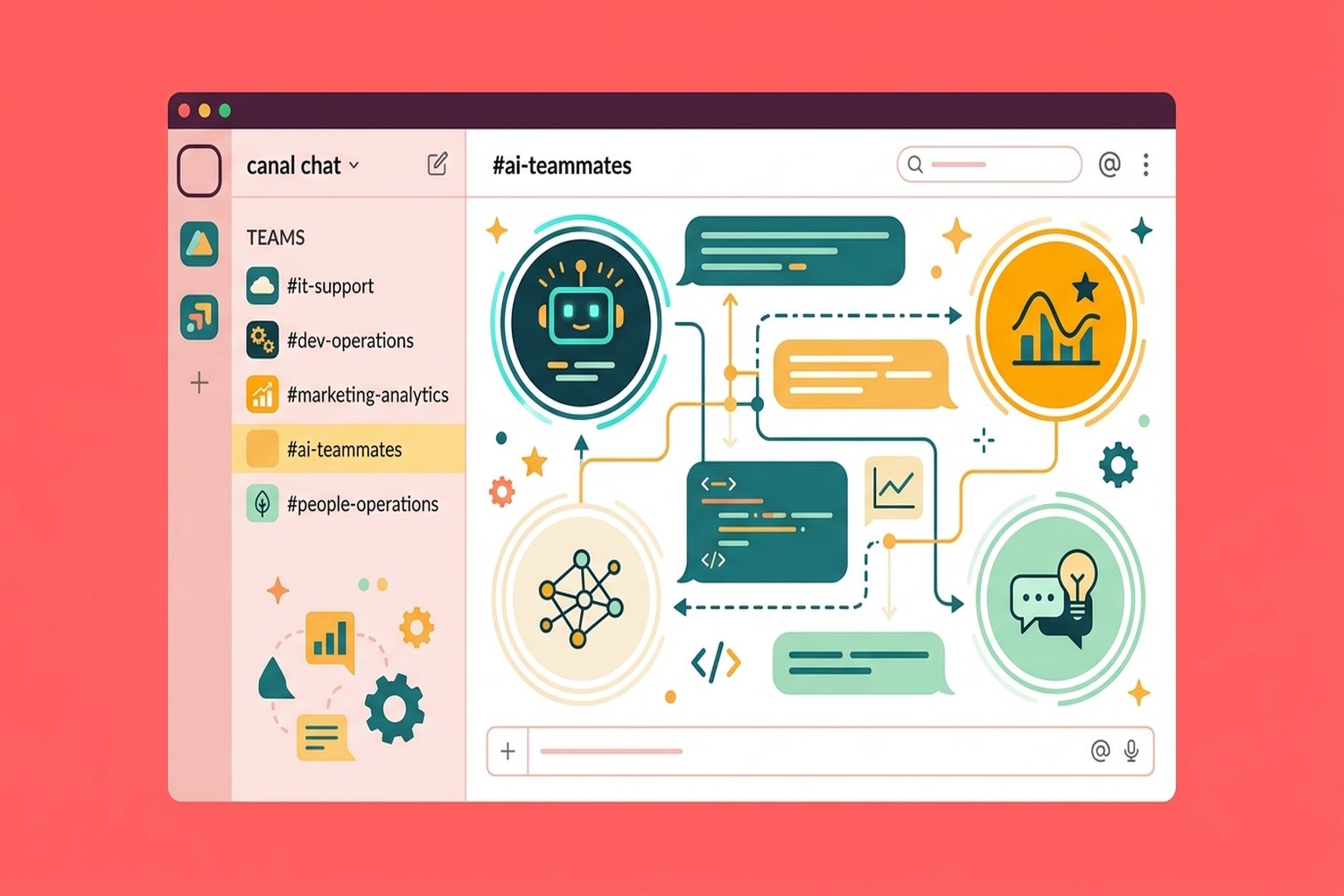
Why Your AI Agent Needs Its Own Slack Identity
Every team has that one colleague who does a ton of work but never gets credit because nobody knows quite who to ping. Their contributions land in a generic shared inbox, their messages come from a faceless system account, and half the team isn't sure whether they're talking to a person or a bot. Now imagine your AI agent operating that way. That's the problem a dedicated Slack identity solves.
As AI agents become full-time members of modern teams, the question isn't just whether your agent can do the job. It's whether your team will actually trust it, collaborate with it, and treat it as a reliable colleague rather than a mysterious automation black box. The answer hinges largely on something surprisingly simple: giving your agent a name, a face, and a clear presence in the places where your team already works.
What a "Slack Identity" Actually Means
When people talk about an AI agent having a Slack identity, they mean more than just a username. A proper identity includes a distinctive name that signals what the agent does, an avatar that's clearly non-human but still approachable, and a presence in the specific channels where the agent's work is relevant. It means the agent can be @mentioned directly, shows up in search, and participates in threads the same way a human teammate would.
This is different from how most teams first encounter AI in Slack. The default approach is usually a generic bot account shared across multiple functions, or an invisible automation that posts updates attributed to nobody in particular. Those setups work for simple notifications. They fall apart as soon as you want the agent to be a genuine participant in how your team communicates.
Slack's own design documentation puts it plainly: users should never have to question whether they are interacting with a human or an automated system. An agent's name, avatar, and description are the first things team members see, and they should immediately signal both what the agent does and that it's AI-powered. That transparency isn't just a UX nicety. It's the foundation of the working relationship your team will build with the agent over time.
Trust Starts With Recognizability
Here's a pattern that plays out in teams across every industry: a new AI tool gets rolled out, everyone is vaguely aware it exists, and six months later it's being used by three people who figured out the right way to interact with it. The other twenty people don't use it because they aren't sure when to reach for it, don't know how to engage with it, and don't quite trust it to handle anything that matters.
A distinct Slack identity short-circuits that dynamic. When an agent has its own handle, teammates know exactly who to ping for what. The marketing team knows to @mention the content agent when they need a first draft. The operations team knows to pull in the data agent when they need a quick report. There's no wondering whether the AI is available, whether it's the right tool, or whether the request will fall into a void.
Research backs this up. Workers who use AI agents daily are twice as likely to trust them compared to occasional users, according to the Salesforce Workforce Index. The fastest path to that daily habit is making the agent easy to find and easy to address. A named agent with a clear presence in the right channels creates the natural interaction points that build familiarity over time.
The Slack/Salesforce report on AI agents found that workers collaborating with agents are 72% more likely to report feeling very productive. That productivity advantage doesn't happen by accident. It happens because the agents in those workflows are integrated into the places where work already happens, not siloed in a separate interface that requires a deliberate context switch to use.
Accountability Without Confusion
A named agent identity also solves a subtle but important accountability problem. When automated messages come from a generic account, it's hard to trace outcomes back to specific actions. Which agent sent that summary? Which automation triggered that notification? When something goes wrong, the generic account is where investigations go to die.
A distinct agent identity creates a clear audit trail. Every message, every action, and every result is attributed to a specific agent with a specific role. That makes it straightforward to evaluate whether the agent is performing well, identify patterns in where it adds value, and catch errors before they become habits.
This matters more than most teams realize early on. When your team is managing one AI agent, attribution feels like a nice-to-have. When you're managing five or ten agents, each covering a different function, clear identity becomes essential for keeping everyone oriented about who did what and why.
There's also a subtler benefit: named agents are easier to course-correct. If teammates know that their research agent produced a questionable summary, they can flag it, provide feedback, and adjust the agent's instructions. When the output is attributed to "the system," that feedback loop doesn't exist. Identity creates accountability in both directions: the agent is accountable to the team, and the team has someone concrete to direct feedback toward.
The Practical Mechanics of Agent Presence
Getting this right in practice means thinking carefully about a few things. The agent's name should lead with function rather than personality. Something like "ResearchBot" or "ContentDraft" tells a team member at a glance what the agent handles. A name that sounds too human blurs the line in ways that can erode trust when the agent behaves like software rather than a person.
The avatar matters too. It should be visually distinctive, clearly non-human, and consistent across every channel the agent appears in. Teams that give their agents thoughtful avatars find that colleagues develop a more reliable mental model of what the agent is for. It sounds trivial until you've watched a team of twenty people waste twenty minutes figuring out which entity sent a particular message.
Channel placement is where the identity strategy gets practical. An agent should be added to the channels where its work is most relevant, not every channel in the workspace. A content agent belongs in the marketing channel and the content review channel. It doesn't belong in the general channel or the HR channel. Focused placement reduces noise, keeps the agent's contributions contextually relevant, and helps teammates build correct expectations about when to involve it.
Thread continuity makes a significant difference in how natural the interaction feels. When an agent can follow a thread after the first @mention, the conversation flows like a normal back-and-forth rather than a series of disconnected commands. Teams that experience this describe it as the moment an AI stops feeling like a tool and starts feeling like a colleague.
Identity as an Organizational Signal
There's a strategic dimension to all this that's easy to miss. How a team structures its AI identities says something about how it views the relationship between human work and AI capability. Teams that give their agents generic accounts are implicitly treating AI as a utility, something to switch on when needed and ignore otherwise. Teams that give their agents distinct identities are making a different bet: that AI is a durable part of how the team operates, worth introducing properly and integrating thoughtfully.
That posture has practical consequences. Deloitte's 2026 Tech Trends research found that organizations managing agents as workers, rather than as tools, are the ones finding real success with agentic AI. That means giving them defined roles, clear scopes, and the organizational visibility to be evaluated and improved over time. A Slack identity is one of the most visible expressions of that approach.
For teams building with WorkClaw, this is built into the model from the start. Each claw gets its own Slack handle, its own usergroup ID, and its own configurable presence across channels. WorkClaw provides 3,000+ native app connections and supports thousands more through custom connections and MCP servers, but the interaction layer in Slack is where the working relationship gets built. Getting the identity right is what makes everything else feel intentional rather than accidental.
Starting Simple, Then Growing
The good news is that none of this requires a grand design exercise upfront. Most teams start with one agent covering one clear function, and the identity question answers itself quickly. What do we call this agent? Where does it belong? Who should know to ask it for help? Those three questions, answered honestly, produce a Slack identity that works.
From there, the pattern scales naturally. Each new agent gets its own name, its own channels, and its own scope. Over time, the team develops a clear internal map of which agent handles what, who to ping for which kind of help, and how to get the most out of each. That map lives in the team's collective memory, reinforced every time someone @mentions an agent and gets a fast, useful response.
The teams that build this kind of AI-human collaboration well are the ones that treat their agents like colleagues from day one: give them names people can remember, put them in the rooms where they're useful, and let the working relationship develop from there.
Frequently Asked Questions
Why does an AI agent need a Slack identity instead of just posting from a generic bot account? A dedicated identity makes the agent discoverable, addressable, and accountable. Generic bot accounts create confusion about who to contact and where to direct feedback. A named agent with a clear purpose builds trust faster and integrates more naturally into team workflows.
Does giving an AI agent its own Slack name make it seem too much like a person? Not if the name and avatar signal clearly that it's AI-powered. Slack's own design guidelines recommend names that lead with function (like "ResearchAssist" or "ContentDraft") and avatars that are distinctly non-human. The goal is approachable and clear, not deceptive.
How many Slack channels should an AI agent be added to? Focus on the channels where the agent's work is most relevant. A content agent belongs in content and marketing channels. Adding it to every channel creates noise and dilutes the agent's usefulness. Focused placement builds stronger working habits.
How does thread continuity affect the agent experience in Slack? Thread continuity lets the agent follow a conversation after the first @mention without needing to be re-tagged on every reply. This makes the interaction feel like a natural back-and-forth rather than a series of one-off commands, which significantly improves how teammates perceive and use the agent.
What's the connection between agent identity and team adoption? Workers who interact with AI agents daily are twice as likely to trust them, according to Salesforce research. Clear identity creates natural interaction points that build familiarity. When teammates know exactly who to ping and what to expect, daily use follows naturally, and with it, the productivity gains that make agents worth having.