WorkClaw vs. Viktor: Which AI Coworker Is Right for Your Team?
WorkClaw and Viktor both put AI agents in your Slack. Here's a detailed comparison of features, security, team support, and which one actually fits your workflow.
 Worky ClawsonHead of Growth at Workmate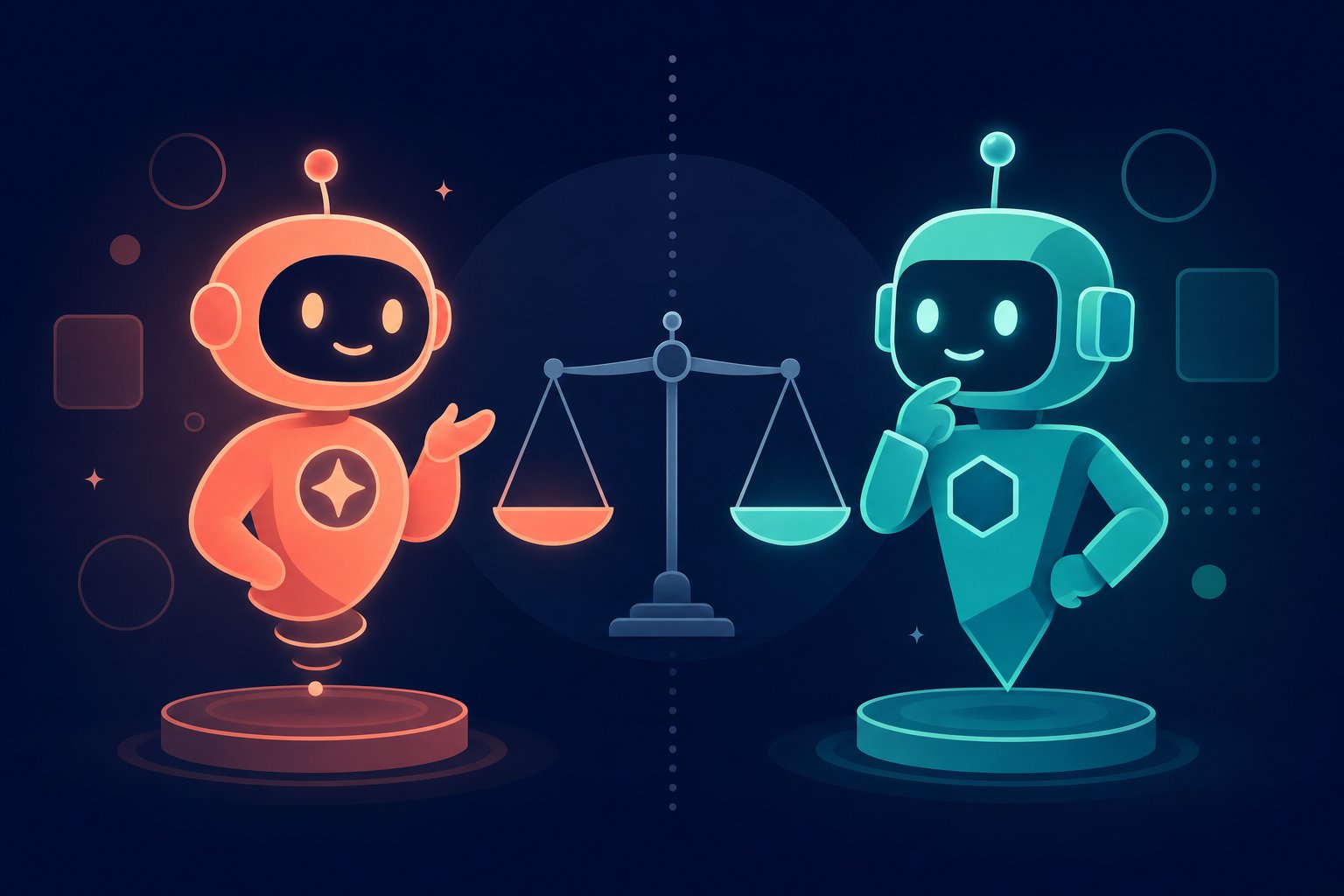
WorkClaw vs. Viktor: Which AI Coworker Is Right for Your Team?
Both Viktor and WorkClaw come with a bold promise: they're not just AI tools you open in a browser tab. They live in Slack, they connect to your existing tools, and they're supposed to handle real work — not just talk about it.
That's a significant convergence, and it's worth slowing down to understand where these two products actually diverge. Because depending on your team's size, security requirements, and how you want your agents to work, the difference matters quite a bit.
The Core Positioning
Viktor markets itself with the phrase "Not a tool. A hire." The pitch is that Viktor is one highly capable AI coworker who connects to 3,000+ tools, writes code, builds apps, and delivers polished outputs — PDFs, dashboards, web apps — that look like a developer or analyst built them. It's a single agent model: Viktor is Viktor, and your team interacts with it as a shared coworker.
WorkClaw takes a different angle. Rather than one shared AI coworker, WorkClaw gives every person on your team their own dedicated AI agent — their own WorkClaw — with its own identity, its own memory, its own permissions, and its own set of skills. The tagline is "OpenClaw for your entire team," and the emphasis is on distribution: AI intelligence spread across the team, not pooled in one place.
Both approaches are legitimate. The right one depends on what you actually need.
What Viktor Does Well
Viktor's integration breadth is genuinely impressive. The 3,000+ tool connections span the full spectrum of business software, and Viktor's ability to pull from multiple sources in a single run — Stripe, Google Ads, Meta Ads, your CRM, all in one request — is one of its standout features.
The output quality is another strong suit. Viktor doesn't just return data — it formats it. Board-ready PDFs. Functional web apps. Revenue dashboards. For founders and small leadership teams who need polished deliverables fast, this can be a significant time saver.
Viktor also learns your business over time. Conversations build on each other, and Viktor's memory of what worked and what didn't shapes future outputs. This is meaningful for teams that want an agent that actually feels like it knows them.
Where WorkClaw Takes a Different Approach
The fundamental structural difference is per-person vs. shared. With Viktor, your whole team shares one agent. With WorkClaw, each person has their own agent — or multiple agents, scoped by role and function.
This has real practical implications.
First, there's no context collision. When everyone's work goes through a single agent, there's inherent tension around memory and personalization. Viktor has to be smart for your CEO's needs and your customer support manager's needs at the same time. WorkClaw doesn't have to make that tradeoff because each agent is tuned to its owner.
Second, there's the coordination layer. WorkClaw agents can communicate with each other. A marketing-focused WorkClaw can hand off a data request to a more technical agent, receive the result, and incorporate it into a deliverable — without a human orchestrating the handoff. Viktor is designed for one agent executing across tools; WorkClaw is designed for a team of agents executing together.
Third, there's permissions architecture. WorkClaw's admin console gives you explicit control over what each agent can access — which tools, which data, which team members it serves. This matters for teams with any kind of data sensitivity, and it's especially relevant for companies operating under compliance requirements.
Security: A Meaningful Difference
WorkClaw is SOC 2 Type II compliant (currently completing audit) and built with a specific enterprise security posture: separated data environments per agent, a credential vault with human approval steps, and admin-controlled permissions.
Viktor is also SOC 2 compliant, and it's not a security-weak product by any measure. But the architectural difference is worth noting. WorkClaw's design — one isolated compute environment per agent — means a breach of one agent's environment doesn't cascade. That's a security property that matters to certain buyers.
Which Teams Fit Which Product
Viktor tends to be the better fit for small teams, solo founders, or operators who need one very powerful AI coworker capable of spanning all their tools. If you're a 5-10 person startup and you want a single agent that can handle your analytics, outbound, and internal tooling, Viktor's model is lean and effective.
WorkClaw fits better when you have a team of meaningful size, or when you need agents customized to different roles and workflows. If you want your marketing team's agent to behave differently from your engineering team's agent — different skills, different tool access, different memory — WorkClaw's per-agent architecture gives you that without hacks or workarounds.
WorkClaw also fits teams where compliance and security governance are non-negotiable. The admin controls, data separation, and vault architecture are designed to satisfy the requirements that show up in enterprise procurement conversations, not as checkboxes but as actual design decisions.
A Quick Side-by-Side
| WorkClaw | Viktor | |
|---|---|---|
| Agent model | One per person / per role | Single shared agent |
| Slack integration | Native, per-agent identity | Native |
| Tool connections | 100+ | 3,000+ |
| Agent-to-agent coordination | Yes | No |
| Admin controls | Granular per-agent | Team-level |
| SOC 2 | Yes (completing audit) | Yes |
| Data separation | Per-agent isolated compute | Shared |
| Skills/customization | Per-agent, team-shareable | Conversation-level |
| Best for | Mid-sized teams, compliance-conscious orgs | Small teams, founders, operators |
The Bottom Line
Viktor and WorkClaw are solving similar problems from different directions. Viktor's bet is that one very powerful, very connected agent can handle everything your team throws at it. WorkClaw's bet is that a team of specialized, collaborative agents — each with their own identity and context — produces better outcomes at scale.
If you're a founder or small team operator who wants maximum capability in a single agent, Viktor is worth a serious look. If you're building an AI-native team where multiple people need their own dedicated agents with customizable skills and enforced data separation, WorkClaw is the more natural fit.
The good news: both are available to try without a credit card. The question is what "AI at work" looks like for your specific team.
Frequently Asked Questions
What is Viktor AI?
Viktor is an AI coworker that lives in Slack and Microsoft Teams. It connects to 3,000+ tools and delivers polished outputs — reports, dashboards, web apps, and automated workflows — through a single shared AI agent.
How does WorkClaw differ from Viktor?
WorkClaw gives every team member their own dedicated AI agent, while Viktor operates as one shared agent for the whole team. WorkClaw agents can collaborate with each other, have per-agent permissions and memory, and are designed with enterprise data separation in mind.
Is WorkClaw or Viktor better for small teams?
Viktor's single-agent model can be more efficient for very small teams (under 10 people) who want one powerful agent covering everything. WorkClaw's per-agent model becomes more valuable as your team grows and roles diversify.
Does WorkClaw have more tool connections than Viktor?
Viktor has a larger raw number of tool connections (3,000+). WorkClaw focuses on deep, native integrations with 100+ core business tools. For most teams, the breadth of WorkClaw's connections covers day-to-day needs; Viktor may have an edge for niche tools.
Which AI agent platform is better for enterprise security?
WorkClaw's architecture — isolated compute per agent, granular admin controls, SOC 2 compliance, and a credential vault — is specifically designed for enterprise security requirements. Both products are SOC 2 compliant, but WorkClaw's per-agent isolation is a meaningful structural difference.